Los Angeles makes the most sense when you explore it neighborhood by neighborhood. One minute you’re eating handmade mochi near a Buddhist temple, the next you’re walking past Korean spas, Armenian bakeries, taquerías, Thai noodle shops, and Ethiopian coffee ceremonies.
That’s the fun of LA. The city doesn’t have one center. It has dozens of them, each shaped by migration, family businesses, markets, festivals, and food that people care about deeply.
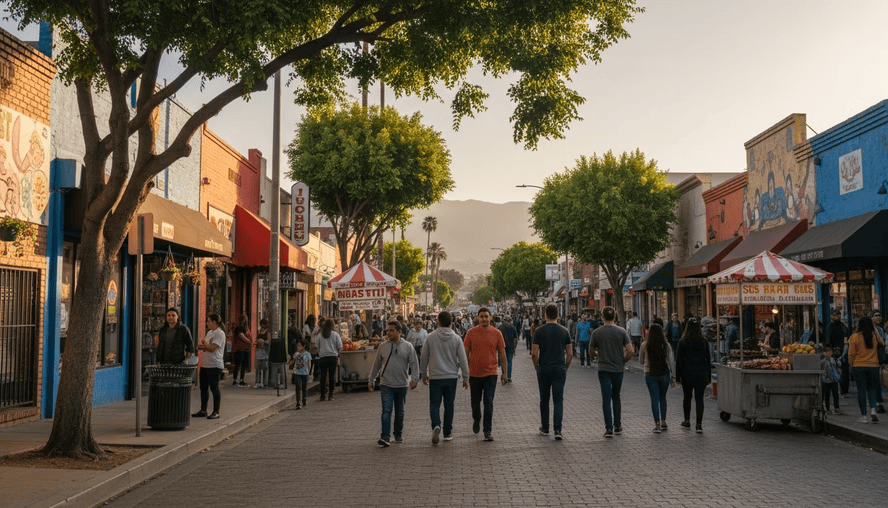
Little Tokyo keeps history, food, and design close together
Little Tokyo is one of the easiest neighborhoods to explore on foot, which makes it a great starting point. It’s compact, lively, and full of details: lanterns, murals, gift shops, ramen counters, historic buildings, and quiet cultural spaces tucked between busy streets.
Start around Japanese Village Plaza, where you’ll find snack shops, matcha, mochi, and casual restaurants. From there, walk to the Japanese American National Museum to understand the neighborhood’s deeper story, including Japanese American life in California and the impact of incarceration during World War II.
For food, Little Tokyo gives you plenty of choices:
- Ramen shops with rich broths and long lines
- Sushi counters and izakayas
- Curry rice, takoyaki, and bento spots
- Japanese bakeries and sweets shops
If you can, visit during Nisei Week, a long-running summer celebration with cultural performances, food, and community events. Even on a regular day, a simple afternoon here can feel full: lunch, a museum stop, a pastry, and a walk through the plaza.
Koreatown is built for late nights and big meals
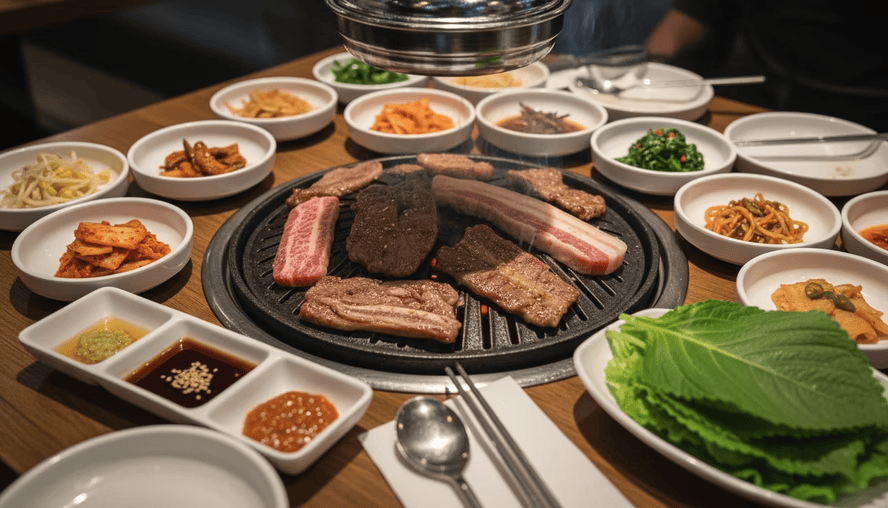
Koreatown has a different rhythm. It’s dense, energetic, and busy well after many parts of LA have gone quiet. The neighborhood is known for Korean barbecue, karaoke, spas, cafes, markets, and restaurants that stay open late.
For a first visit, Korean barbecue is the classic move. Go with friends if you can, order a mix of meats, and take your time with the banchan, the small side dishes that make the meal feel generous before the grill even heats up.
But Koreatown is more than barbecue. Look for:
- Soft tofu stew
- Cold noodles on a hot day
- Korean fried chicken
- Gimbap and casual lunch counters
- Dessert cafes with shaved ice or sweet pastries
The area around Wilshire Boulevard and nearby side streets has a deep mix of old-school restaurants, modern cafes, and shopping centers. If you’re curious about local events, check community calendars for Korean cultural festivals, concerts, and food events throughout the year.
Visitor tip: parking can be rough. If you’re meeting friends, consider rideshare or Metro when it fits your route.
Thai Town, Little Armenia, and Little Ethiopia reward curious eaters
Some of LA’s best neighborhood exploring happens along smaller corridors where one bakery, market, or cafe leads you to the next place.
Thai Town is small but full of flavor
Thai Town runs along Hollywood Boulevard in East Hollywood, and it packs a lot into a short stretch. This is where to go for boat noodles, papaya salad, grilled meats, Thai desserts, and late-night meals that don’t feel watered down.
Look for restaurants serving regional dishes beyond pad thai. Try jade noodles, khao soi, larb, or crispy pork with rice. If you see a Thai dessert counter, stop. Coconut milk, pandan, sticky rice, and mango show up in ways that are worth slowing down for.
Around Thai New Year, Songkran celebrations often bring music, food, and cultural performances to the area. Dates and formats can change, so check before you go.
Little Armenia has bakeries, markets, and family recipes
Little Armenia overlaps with parts of East Hollywood, and its Armenian food scene is a huge part of the neighborhood’s appeal. Bakeries are the best entry point. Pick up lahmajoun, borek, gata, or fresh lavash, then wander into a market for olives, cheeses, spices, and pantry items.
For a heartier meal, look for grilled meats, kebabs, soups, and stews influenced by Armenian and nearby regional traditions. Many places are casual, family-run, and better suited to a relaxed lunch than a rushed stop.
Little Ethiopia is made for sharing
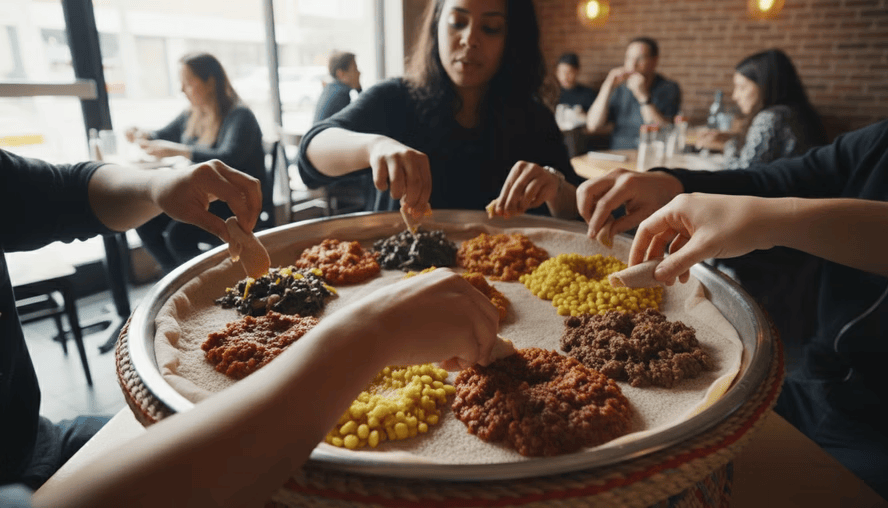
Little Ethiopia sits along Fairfax Avenue, where restaurants serve injera, richly spiced stews, lentils, greens, and slow coffee. If you haven’t eaten Ethiopian food before, order a combination platter. It gives you a mix of flavors and textures, and the shared style makes the meal feel social right away.
Coffee matters here too. A traditional Ethiopian coffee service can be slow in the best way, with roasted beans, strong coffee, and time to talk.
Boyle Heights carries music, murals, and Mexican American history
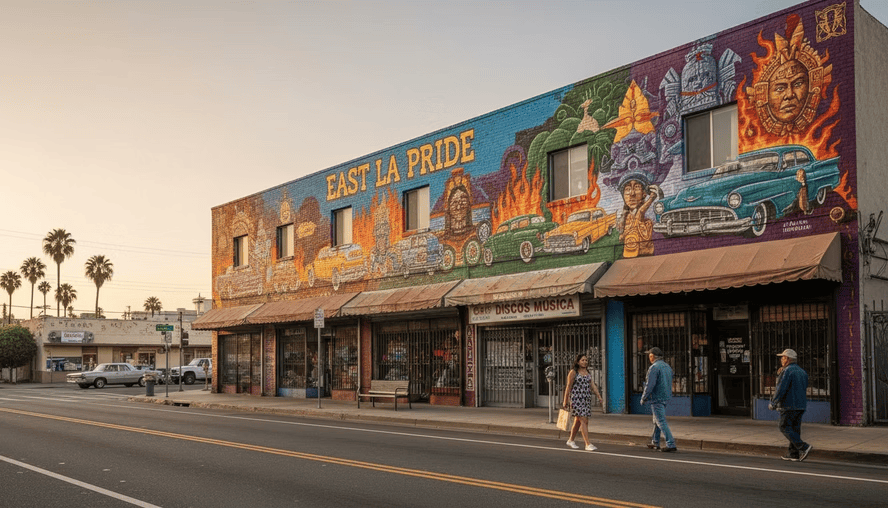
Boyle Heights is one of LA’s most important cultural neighborhoods, with deep Mexican American, Jewish, Japanese, and immigrant histories. Today, it’s known for murals, mariachi music, community activism, bakeries, old-school restaurants, and everyday neighborhood life that hasn’t been polished into a theme park.
Start at Mariachi Plaza, where musicians have gathered for generations. From there, explore nearby streets for pan dulce, tacos, tamales, and family-owned spots that locals have supported for years.
Food highlights might include:
- Fresh tortillas and tacos
- Chiles rellenos and mole
- Pan dulce from neighborhood bakeries
- Tamales during the holidays
- Casual diners with long local histories
Boyle Heights also has strong arts and cultural traditions. Look for community events around Día de los Muertos, local gallery shows, music performances, and mural walks. Be respectful when photographing murals, homes, and people. This is a real neighborhood, not a backdrop.
How to explore these neighborhoods without rushing them
The best way to experience Los Angeles ethnic neighborhoods’ food, culture, and hidden gems is to pick one area at a time. Trying to hit six neighborhoods in one day turns everything into a checklist, and that’s where LA starts to feel exhausting.
A better plan looks like this:
Morning – Visit a museum, market, bakery, or cultural landmark.
Afternoon – Walk the main streets, browse shops, and stop for a casual meal.
Evening – Stay for dinner, coffee, karaoke, music, or a local event.
A few tips make the day smoother:
- Check hours before you go, since small businesses may close between lunch and dinner.
- Bring cash, especially for bakeries, markets, and smaller food stands.
- Don’t judge a restaurant by its exterior. Some of LA’s best meals happen in strip malls.
- Order something unfamiliar alongside something you know.
- Learn a few words of thanks if you’re visiting a community where another language is common.
Los Angeles opens up when you stop treating it like a list of landmarks. Spend a slow afternoon in Little Tokyo. Stay out late in Koreatown. Follow the smell of bread in Little Armenia. Share injera on Fairfax. Listen for mariachi at Boyle Heights.
Pick one neighborhood, show up hungry, and give yourself time to wander. That’s where LA gets good.
