New York City is not one place. It is hundreds of blocks with their own accents, rituals, corner delis, subway sounds, and late-night lights. A walk of 20 minutes can move from cast-iron storefronts to brownstone stoops, from jazz clubs to waterfront warehouses, from immigrant foodways to Michelin-starred dining.
The neighborhoods below offer a strong first map of the city because each one tells a different part of New York’s story. The Lower East Side shows the immigrant city. Greenwich Village captures bohemian rebellion and old literary glamour. Harlem carries the legacy of Black culture, music, and civic power. Williamsburg and DUMBO show how Brooklyn’s industrial waterfront became one of the city’s most photographed areas.
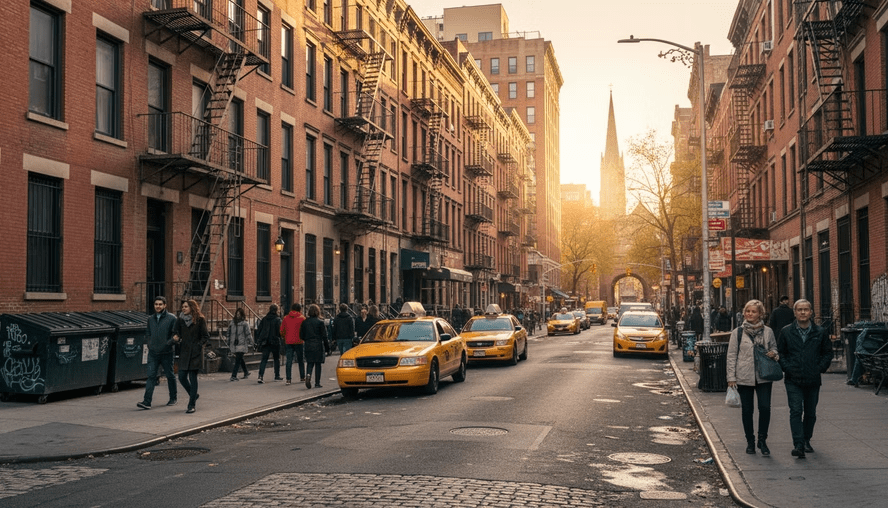
Start with the streets, because New York reveals itself block by block.
The Lower East Side preserves the immigrant city in plain sight
The Lower East Side has long been one of New York’s great arrival points. In the late 19th and early 20th centuries, it became home to large Jewish, Italian, Irish, German, Chinese, and Eastern European communities. The Tenement Museum, located in preserved tenement buildings on Orchard Street, documents those stories through real apartments once occupied by immigrant families. It is one of the clearest ways to understand how crowded housing, garment work, language, and food shaped modern New York.
That history is still visible. Look up at the fire escapes. Notice the narrow storefronts. Walk Essex Street and Orchard Street, and the neighborhood shifts between pickle shops, indie boutiques, old synagogues, cocktail bars, and galleries.
What to do on the Lower East Side
The Tenement Museum should be the anchor. Its guided tours use specific family histories rather than broad summaries, which makes the past feel immediate. Nearby, the Essex Market traces its roots to public market traditions that date back generations, though its current building is modern and easy to explore for a casual meal.
For art, the New Museum on the Bowery focuses on contemporary work and often shows artists before they become widely known. At night, the neighborhood changes tempo. Small music venues, subterranean bars, and comedy rooms fill the blocks around Ludlow, Rivington, and Allen streets.
Where to eat on the Lower East Side
The best meals here connect old New York with the city’s current appetite for invention.
- Katz’s Delicatessen
Famous for pastrami on rye, Katz’s has operated on the Lower East Side since the late 19th century. It remains busy for a reason: the counter service, ticket system, and towering sandwiches feel like theater.
- Russ & Daughters Cafe
The appetizing tradition, smoked fish, bagels, bialys, and spreads, is central to Jewish New York. This sit-down cafe builds on the legacy of the original Russ & Daughters shop on East Houston Street.
- Dirt Candy
Amanda Cohen’s vegetable-focused restaurant helped prove that plant-based cooking could be clever, serious, and fun without feeling like a compromise.
- Scarr’s Pizza
A retro slice shop with an emphasis on quality ingredients, Scarr’s gives the classic New York slice a careful update.
Where to stay on the Lower East Side
- citizenM New York Bowery
A smart choice for travelers who want compact rooms, modern design, and easy access to the Bowery, Nolita, and SoHo.
- The Ludlow Hotel
Good for a romantic or design-forward stay. Rooms often feature warm wood, city views, and a downtown feel.
- Hotel 50 Bowery
Set near Chinatown and the Lower East Side, this hotel works well for visitors who want to move easily between food neighborhoods.
- The Bowery Hotel
A splurge with old-world interiors, low lighting, and a strong sense of downtown atmosphere.
Greenwich Village still feels like New York’s great stage
Greenwich Village became famous as a home for writers, radicals, artists, musicians, and people who wanted room to live differently. In the early 20th century, the Village drew bohemians and political thinkers. By the 1950s and 1960s, it was central to folk music, Beat writing, Off-Broadway theater, and LGBTQ+ history.
The neighborhood’s crooked streets help it feel distinct. Unlike much of Manhattan, which follows the 1811 street grid, parts of the Village kept older street patterns. That is why a simple walk can turn into a happy confusion of small parks, townhouses, cafes, and side streets.
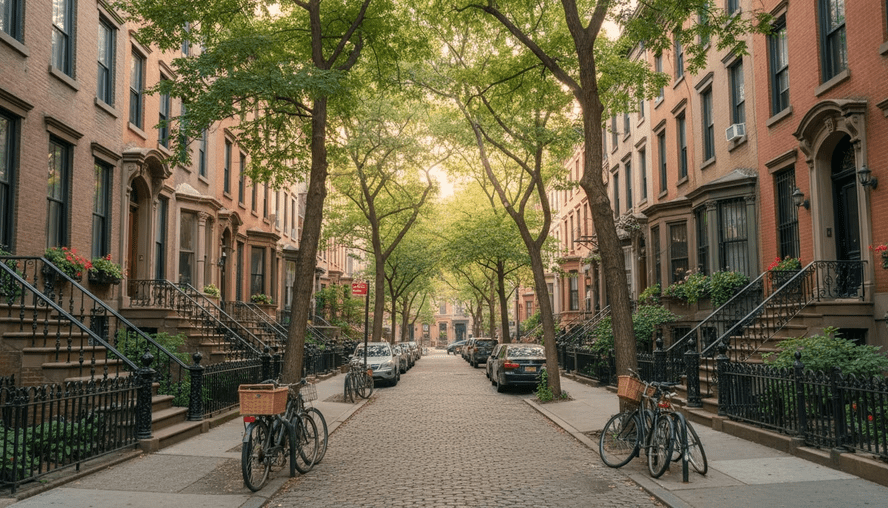
Greenwich Village rewards slow walking and wrong turns.
What to do in Greenwich Village
Start at Washington Square Park, long associated with artists, students, chess players, musicians, and public protest. The arch, completed in the late 19th century, frames one of Manhattan’s most recognized public spaces.
A short walk away, the Stonewall National Monument marks the site linked to the 1969 Stonewall uprising, a turning point in the modern LGBTQ+ rights movement. The National Park Service recognizes it as the first U.S. national monument dedicated to LGBTQ+ rights.
For nightlife, the Village still has serious range. Comedy Cellar is known for tight sets and occasional major drop-ins. Blue Note remains one of the city’s best-known jazz clubs. Small theaters and piano bars keep the area lively after dark.
Where to eat in Greenwich Village
Dining in the Village can feel intimate, even when the restaurant is famous.
- Via Carota
A beloved Tuscan-inspired spot from chefs Jody Williams and Rita Sodi. The room is cozy, the vegetables are excellent, and the cacio e pepe has a loyal following.
- Minetta Tavern
This historic restaurant mixes steakhouse energy with literary New York mood. The Black Label Burger and steaks draw many diners, but the room itself is part of the appeal.
- Buvette
A tiny French-influenced cafe that works for breakfast, wine, small plates, or a slow afternoon.
- Mamoun’s Falafel
Founded in the 1970s, Mamoun’s is a longtime Village staple for falafel, shawarma, and late-night meals.
- Dante
Known for aperitifs and cocktails, Dante connects Italian cafe culture with New York bar craft.
Where to stay in Greenwich Village
- Washington Square Hotel
A neighborhood classic near the park, useful for travelers who want a central Village base without a mega-hotel feel.
- The Marlton Hotel
Stylish and compact, with a clubby lobby and a location that works well for walking.
- Walker Hotel Greenwich Village
A polished option with Art Deco touches and easy access to both the Village and Chelsea.
- The Standard, High Line
Technically on the western edge near the Meatpacking District, this is a splurge for travelers who want views, nightlife, and quick access to the High Line.
Harlem carries music, literature, and civic history on every avenue
Harlem is essential to any serious understanding of New York. In the early 20th century, it became a major center of Black life and culture. The Harlem Renaissance brought writers, musicians, artists, and intellectuals into national focus. Figures such as Langston Hughes, Zora Neale Hurston, Duke Ellington, and Bessie Smith are tied to the era’s legacy, though Harlem’s cultural influence did not end there.
The neighborhood also played a major role in civil rights history, church life, jazz, soul food, and political organizing. Today, Harlem blends landmark institutions with brownstone blocks, new restaurants, African markets, bookstores, and community gardens.
What to do in Harlem
The Apollo Theater is the headline attraction. Since the 1930s, it has helped launch and celebrate generations of performers. Its Amateur Night is one of New York’s most famous live traditions.
For architecture, walk Strivers’ Row, a planned group of late 19th-century townhouses known for elegant brickwork and historic prestige. The Abyssinian Baptist Church and other Harlem churches reflect the neighborhood’s deep civic and spiritual roots, though visitors should be respectful of worship spaces and schedules.
The Studio Museum in Harlem has played a major role in supporting artists of African descent. Its programming and collection have made it a key cultural institution, even as its physical site has gone through redevelopment.
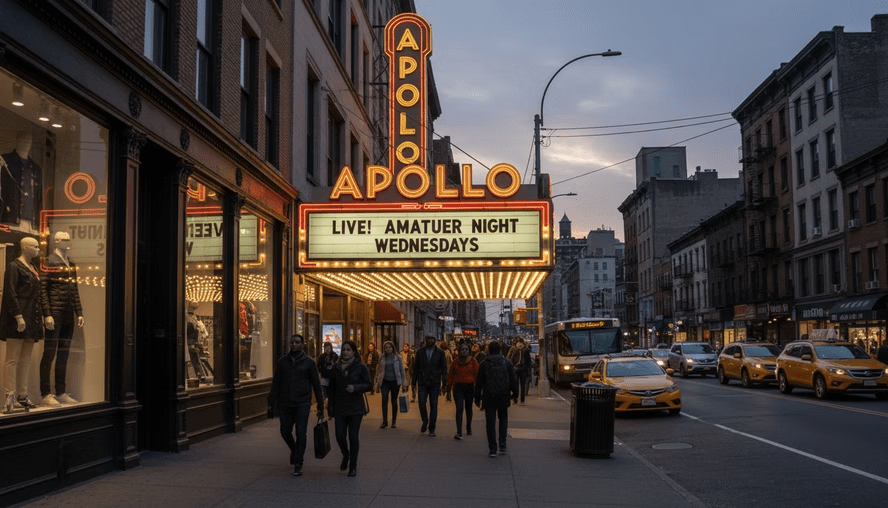
Harlem’s cultural legacy is grounded in real stages, streets, and voices.
Where to eat in Harlem
Harlem’s dining scene is one of the strongest reasons to spend real time uptown.
- Sylvia’s Restaurant
Open since the 1960s, Sylvia’s is one of the city’s most famous soul food restaurants. Fried chicken, collard greens, cornbread, and sweet tea make it a landmark meal.
- Red Rooster Harlem
Marcus Samuelsson’s restaurant celebrates Harlem’s food culture with comfort dishes, live music nights, and a lively room.
- Melba’s
Known for chicken and waffles, catfish, and generous Southern-style plates, Melba’s has become a modern Harlem favorite.
- Amy Ruth’s
Another strong soul food stop, especially for waffles, fried chicken, and classic sides.
- Lido
A welcoming option for Italian cooking, brunch, and a more relaxed dinner on Frederick Douglass Boulevard.
Where to stay in Harlem
- Aloft Harlem
A practical mid-range hotel near 125th Street transit, the Apollo, and major subway lines.
- Renaissance New York Harlem Hotel
A polished option for travelers who want more full-service comfort uptown.
- The Harlem Flophouse
A character-rich guesthouse with vintage style. Best for travelers who care more about atmosphere than standard hotel amenities.
- Northern Lights Mansion
A bed-and-breakfast style stay in a historic townhouse, suited to visitors who want a residential feel.
Williamsburg and DUMBO show Brooklyn’s waterfront reinvention
Brooklyn’s waterfront neighborhoods prove that New York keeps rewriting itself. Williamsburg was once a major industrial and immigrant district, shaped by shipping, manufacturing, and communities including German, Italian, Jewish, Puerto Rican, Dominican, and Hasidic Jewish residents. In recent decades, artists, music venues, restaurants, and new development changed the area’s public image, though older communities remain essential to its identity.
DUMBO, short for Down Under the Manhattan Bridge Overpass, has its own industrial story. Warehouses and factories once defined the area between the Brooklyn and Manhattan bridges. Many of those buildings now hold apartments, galleries, offices, shops, and restaurants, with cobblestone streets that preserve the neighborhood’s old working waterfront character.
What to do in Williamsburg and DUMBO
In Williamsburg, walk Bedford Avenue for shops, cafes, bars, and people-watching. The East River waterfront offers Manhattan skyline views, especially near Domino Park, which incorporates elements of the former Domino Sugar Refinery site.
In DUMBO, start at Brooklyn Bridge Park. It stretches along the waterfront with lawns, piers, sports areas, and some of the best views of Lower Manhattan. The classic photo spot on Washington Street frames the Manhattan Bridge between brick buildings, though it can be crowded. For a better experience, go early and keep moving so residents and workers can pass.
The Brooklyn Bridge walk connects DUMBO to Lower Manhattan and remains one of the city’s great free activities. The bridge opened in 1883 and was one of the major engineering achievements of its time.
Where to eat in Williamsburg and DUMBO
Brooklyn’s dining scene is broad, so the best picks depend on mood.
- Peter Luger Steak House
A Williamsburg institution that dates to the 19th century. It is old-school, direct, and famous for porterhouse steak.
- Lilia
Missy Robbins’ Italian restaurant is known for handmade pasta, seafood, and a room that feels both polished and relaxed.
- Laser Wolf Brooklyn
A lively Israeli skewer house on a rooftop, with skyline views and a generous spread of salatim.
- Sunday in Brooklyn
A popular all-day Williamsburg spot for brunch, dinner, and seasonal American cooking.
- The River Café
A DUMBO fine-dining classic set by the water, known for Manhattan views and a special-occasion feel.
- Juliana’s Pizza
Founded by Patsy Grimaldi after his earlier pizzeria became famous nearby, Juliana’s serves coal-oven pies close to the Brooklyn Bridge.
Where to stay in Williamsburg and DUMBO
- Pod Brooklyn
A budget-minded Williamsburg choice with small, efficient rooms and a central location.
- The Hoxton, Williamsburg
A stylish mid-range option with strong design, dining, and easy access to nightlife.
- Wythe Hotel
Set in a former factory building, this hotel fits the neighborhood’s industrial character and offers memorable skyline views.
- 1 Hotel Brooklyn Bridge
A luxury DUMBO stay near Brooklyn Bridge Park, ideal for travelers who want waterfront views and quick access to both Brooklyn and Lower Manhattan.
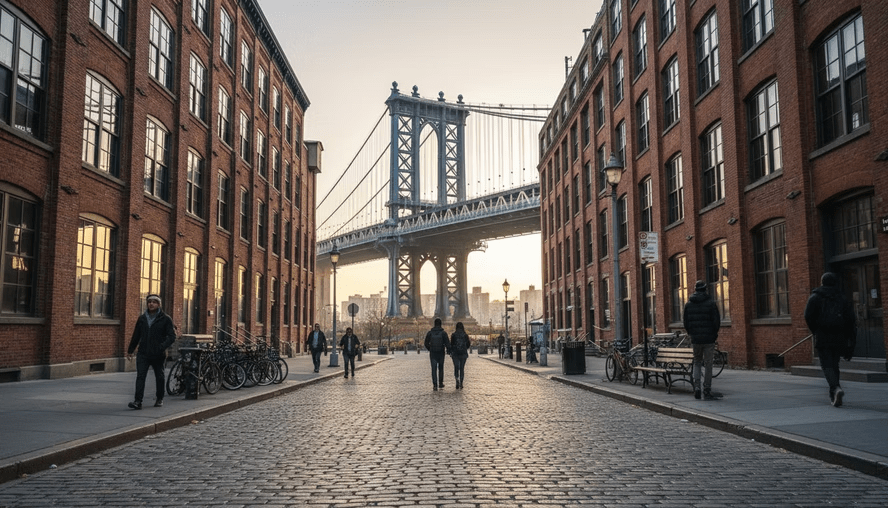
DUMBO turns old infrastructure into one of the city’s most memorable walks.
How to choose the right neighborhood for your trip
The best base depends on the New York you want to experience.
| Best fit | Neighborhood to consider | Why it works |
| Food history and downtown nightlife | Lower East Side | Strong immigrant history, late-night energy, nearby Chinatown and SoHo |
| Classic Manhattan charm | Greenwich Village | Walkable streets, jazz, comedy, cafes, and historic LGBTQ+ sites |
| Music and cultural heritage | Harlem | Apollo Theater, soul food, brownstones, and Black cultural history |
| Waterfront views and Brooklyn style | Williamsburg or DUMBO | Skyline parks, warehouse architecture, restaurants, and bridge walks |
A good New York trip does not require checking off every famous landmark. It often works better to pick two neighborhoods in a day and give them time. Visit a museum or historic site, walk without rushing, eat something tied to the area, and save space for a place you did not plan.
That is the real reward of exploring New York City neighborhoods: the city becomes more than a skyline. It becomes a set of lived-in places, each with its own memory, flavor, and street-corner rhythm.
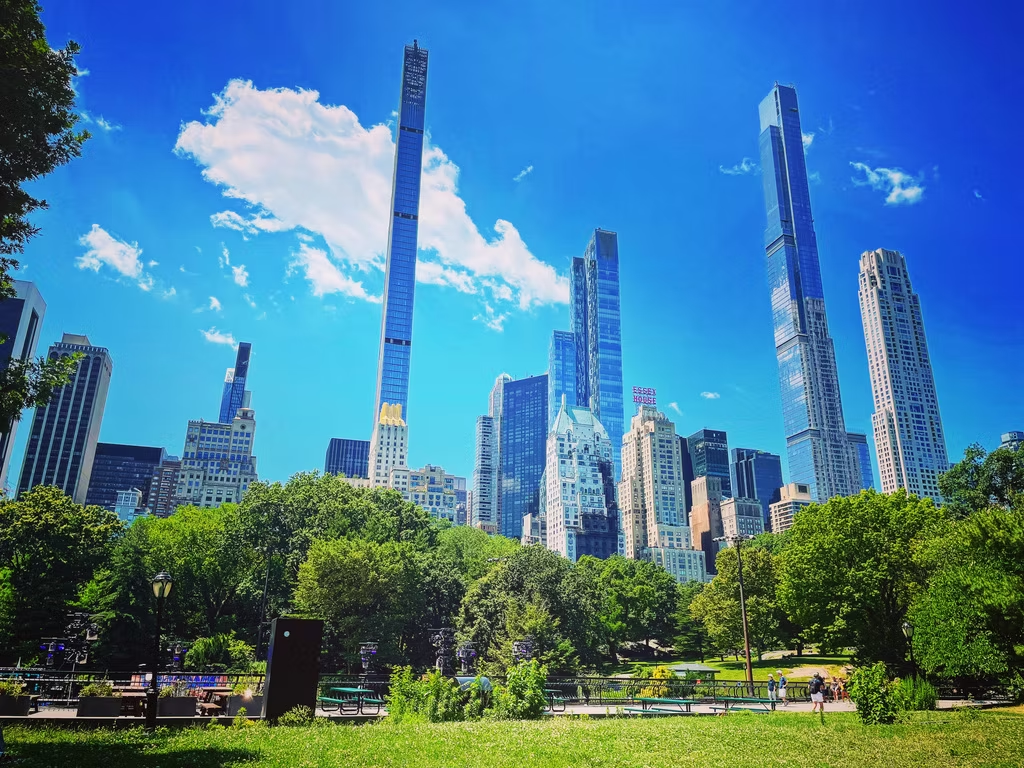
New York City skyscrapers from Central Park
